
Comparing administration routes
NAD Injections vs IV Therapy
Subcutaneous NAD injections and NAD IV infusions use different administration methods and create very different treatment experiences.
Explore Embody NAD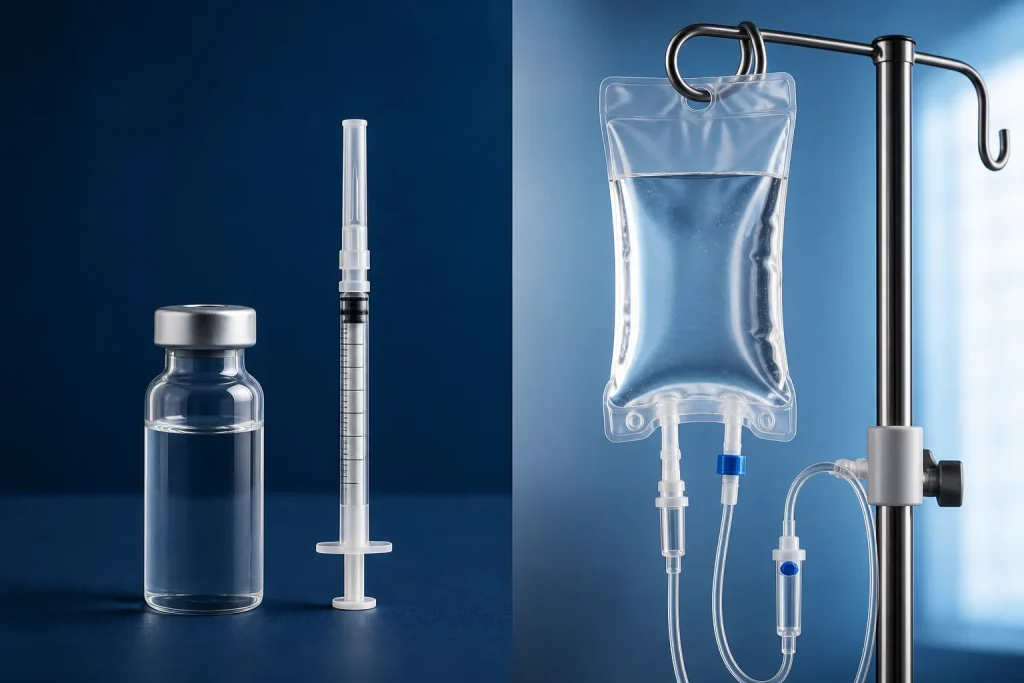
Side-by-side comparison
How injections and IV therapy differ
| Feature | Subcutaneous injections | IV therapy |
|---|---|---|
| Administration | Injected into fatty tissue beneath the skin | Infused directly into a vein |
| Typical setting | May be self-administered at home after instruction | Usually administered in a clinic or supervised setting |
| Time commitment | Generally brief once supplies are prepared | Requires placement of an IV and an infusion appointment |
| Schedule | Follows an individualized at-home prescription | Follows the clinic’s infusion protocol and appointments |
| Experience | Small injection volume with local site considerations | Larger fluid volume with infusion-rate tolerability considerations |
Which route fits your needs?
Convenience is a major difference
At-home injections may appeal to adults who want to avoid repeated clinic visits and lengthy infusions. IV therapy may appeal to those who prefer administration by clinic staff.
Neither route should be selected solely from online marketing. A qualified provider should discuss suitability, formulation, tolerability, and expectations.
Understanding the routes
Subcutaneous injection and intravenous infusion are not interchangeable
A subcutaneous injection places a relatively small volume into fatty tissue beneath the skin. An IV infusion delivers fluid directly into a vein over a supervised period. The route affects preparation, administration time, setting, local reactions, and the type of support needed.
Do not use an IV protocol to choose a subcutaneous amount or schedule. Concentrations and instructions are specific to the formulation and prescription. Our NAD injection dosage guide explains the measurements used for at-home injections.
At-home injections
Approved patients prepare a prescribed volume, use a provider-approved site, and dispose of sharps properly.
Clinic infusions
Staff establish intravenous access, monitor the infusion, and manage the clinical appointment.
Scheduling
Injections follow an individualized home schedule; infusions require available clinic time and travel.
Support
Both routes require qualified medical evaluation and a way to report reactions or treatment concerns.
Time and convenience
At-home injections avoid repeated infusion appointments
Once an approved patient understands preparation and administration, a subcutaneous injection is generally brief. The tradeoff is personal responsibility for storage, syringe measurement, site rotation, and sharps disposal. Read about NAD injections at home before selecting this route.
IV therapy shifts administration to clinic staff, but it typically requires travel, IV placement, and time in the treatment chair. Appointment length may vary with the clinic protocol and individual tolerability.
Side effects and tolerability
Each route has different practical concerns
Subcutaneous injections may cause temporary pain, redness, swelling, bruising, or irritation at the injection site. Repeated use of the same small area can worsen local problems, so follow the site-rotation guide.
IV therapy can involve discomfort from IV placement and reactions during an infusion. The clinical team should explain what monitoring is provided and what symptoms should be reported immediately. Neither route guarantees a particular benefit, and more intensive administration does not automatically mean a better result.
Review NAD injection side effects and NAD injection safety. Discuss health history, medications, allergies, pregnancy status, and previous reactions with the treating clinician.
Choosing a format
Decide whether home use or clinic administration fits better
At-home injections may suit adults who want a prescription pathway without recurring infusion visits and who can follow detailed handling instructions. IV therapy may fit people who strongly prefer staff administration or whose clinician recommends supervised treatment.
This site recommends Embody only for its provider-guided at-home injection pathway. We do not rank IV clinics or recommend a competing provider. Read our Embody NAD injections review or learn how to access NAD injections online.
Approval is not guaranteed, and neither route should be chosen from a testimonial or broad wellness claim. A licensed clinician must determine whether treatment is appropriate.
Questions to discuss before choosing
Route selection should reflect the complete treatment experience
Ask how each route is administered, how often visits or home administrations may occur, what monitoring is provided, and which symptoms require prompt contact. If you have difficulty with needles, limited hand dexterity, unreliable refrigeration, or concerns about self-administration, tell the clinician. If travel, infusion time, or repeated appointments are major barriers, explain those as well.
Ask whether evidence supporting a claim actually involved the proposed route. An IV study cannot establish the same absorption, exposure, or result for a compounded subcutaneous injection. Likewise, marketing language about injections does not prove an IV outcome. Keep expectations tied to the specific product and plan under consideration.
For at-home injections, review the current vial label with every refill and never substitute an infusion protocol. Learn about injection frequency and proper vial storage. If instructions conflict, pause and contact Embody or the dispensing pharmacy.
The practical difference is straightforward: IV therapy provides staff-administered treatment in a clinical setting, while Embody’s pathway is designed for approved patients using prescribed subcutaneous injections at home. This site supports the Embody injection pathway only.
Before beginning either route, provide complete health and medication information and confirm what to do if an appointment or home administration is missed. Do not combine IV and subcutaneous schedules unless the treating clinician specifically directs it. Keep records of the formulation and route actually received so follow-up discussions remain accurate.
Always follow the current prescription and route-specific instructions exactly.
Current recommendation
Prefer an at-home injection process?
Embody offers online medical evaluation and prescribed subcutaneous NAD injections for approved patients.
Visit Embody NAD